

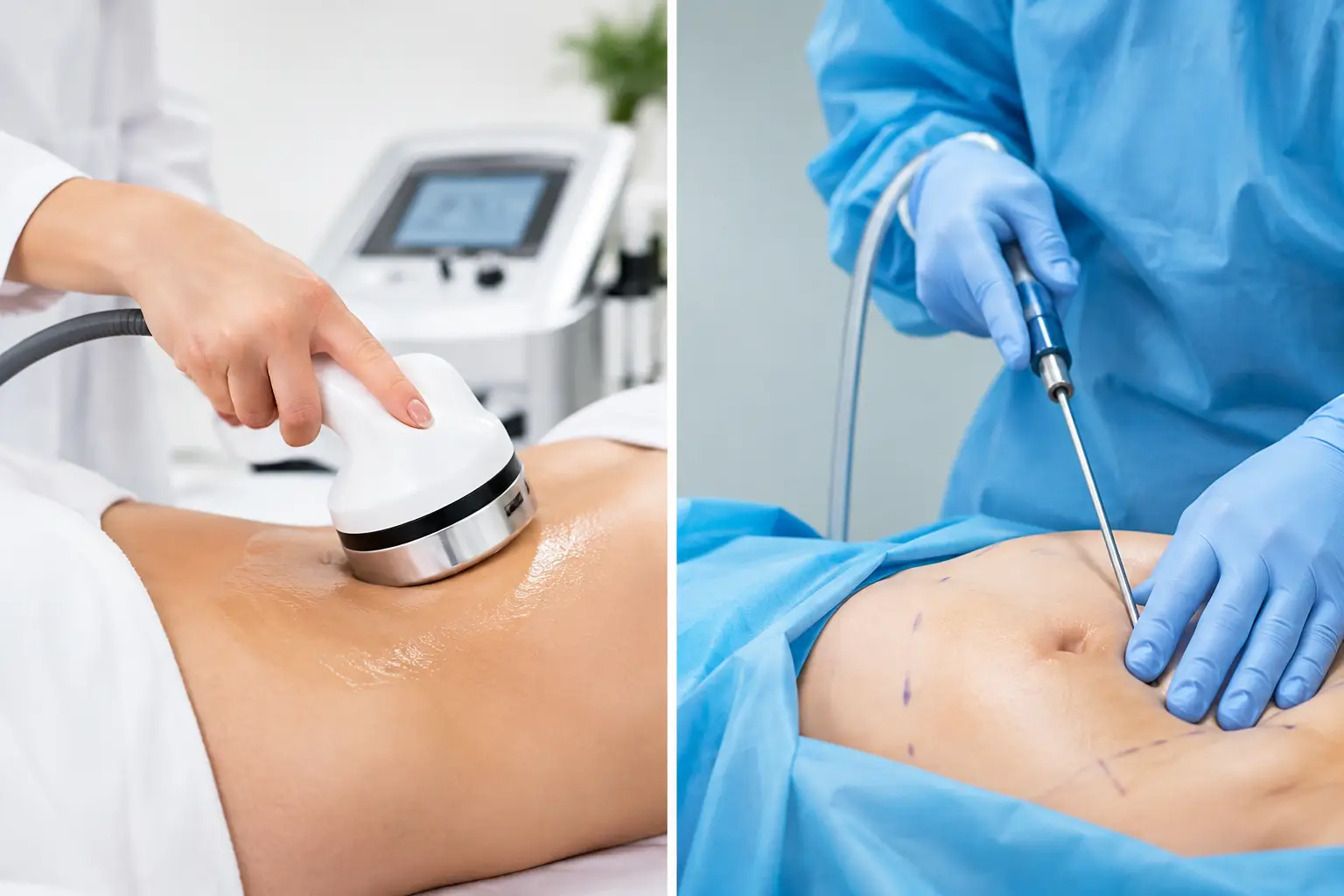
Ultrasound Cavitation Versus Liposuction Compared
A stubborn lower-belly area can feel frustrating even when you are eating well, exercising regularly, and doing the things that support your health. When you are ready to explore body contouring, the choice often comes down to ultrasound cavitation versus liposuction. Both options aim to improve the appearance of localized fat, but they take very different paths to get there.
One is a non-surgical treatment designed for gradual refinement with no surgical recovery. The other is a surgical procedure capable of more dramatic fat removal in a single treatment area. The right choice depends on your goals, your comfort with downtime, your budget, and the level of change you hope to see.
Ultrasound Cavitation Versus Liposuction: The Core Difference
Ultrasound cavitation is a non-invasive body contouring treatment. It uses low-frequency ultrasound energy to target fat beneath the skin. The energy is intended to disrupt fat cells, and the body processes the released contents through its natural metabolic and lymphatic systems over time. Treatment is commonly used on areas such as the abdomen, flanks, thighs, upper arms, and back.
Liposuction is a medical surgery performed by a qualified surgeon. Small incisions are made, a thin tube called a cannula is inserted, and fat is physically removed from the treatment area using suction. Depending on the procedure and area being treated, liposuction may involve local anesthesia with sedation or general anesthesia.
That difference matters. Cavitation is about gradual, non-surgical contour support. Liposuction is about surgical fat reduction and more immediate reshaping. Neither option should be viewed as a substitute for weight loss or a healthy lifestyle.
What Results Can You Expect?
For many clients, the biggest question is simple: which treatment produces better results? The honest answer is that liposuction generally creates a more noticeable reduction in fat volume than ultrasound cavitation. Because fat is removed during surgery, the change can be significant once swelling resolves.
Ultrasound cavitation results tend to be subtler and develop over a series of sessions. Some clients notice that an area looks smoother, feels less full, or fits more comfortably in clothing after treatment. Results vary with the amount of localized fat, the treatment area, hydration, activity level, and consistency with the recommended plan.
Cavitation can be a beautiful fit for someone who is close to their comfortable weight and wants to refine a specific area without surgery. It is not the right expectation to seek a liposuction-level transformation from a non-invasive service.
Skin quality also plays a role. Removing fat, whether gradually or surgically, does not automatically tighten loose skin. If skin laxity is part of your concern, radiofrequency skin tightening or another personalized approach may be recommended alongside body contouring. A thoughtful treatment plan looks at your whole concern, not only the number on a scale.
Results Take Different Timelines
With liposuction, you may see an early change after the procedure, but swelling and bruising can temporarily hide the final contour. Healing takes patience. It may be several months before the area settles and the final result becomes clear.
With cavitation, there is no dramatic overnight reveal. Treatments are typically spaced over several weeks, allowing your body time to respond. Clients often choose a package or treatment series because consistency supports a more visible cumulative result. Maintaining hydration, balanced nutrition, and regular movement can support your wellness goals during the process.
Downtime and Comfort: A Meaningful Trade-Off
For people balancing careers, family, travel, and social plans, downtime can be the deciding factor.
Ultrasound cavitation is generally comfortable and requires little to no downtime. You may feel warmth, gentle pressure, or hear a high-pitched sound in the ear during treatment, depending on the device and treatment method. Most clients return to normal daily activities right away. Mild temporary redness or tenderness can occur, but recovery is typically simple.
Liposuction requires real recovery time. You may need to wear compression garments, limit certain activities, manage soreness, and arrange help at home depending on the scope of your procedure. Bruising, swelling, numbness, and discomfort are common during healing. Your surgeon will provide specific aftercare instructions and a timeline for returning to exercise and other activities.
Neither choice is inherently better. If you want the strongest potential change and are prepared for surgery and recovery, liposuction may be worth considering with a board-certified plastic surgeon. If protecting your schedule and avoiding incisions are priorities, cavitation may better align with your lifestyle.
Cost Considerations Beyond the Price Tag
Liposuction usually has a higher upfront cost because it is surgery. The total can include surgeon fees, anesthesia, facility costs, compression garments, medications, and follow-up care. Pricing varies widely based on the areas treated and the complexity of the procedure.
Ultrasound cavitation is generally more accessible per appointment, although multiple sessions are often needed. When comparing prices, ask how many treatments are recommended for your goals and whether your plan includes any complementary services. It is also wise to compare value rather than choosing solely by the lowest advertised price.
A safe, personalized treatment performed by trained professionals is worth more than a rushed experience or unrealistic promise. Body contouring should feel like an investment in confidence and self-care, not pressure to change yourself overnight.
Who Is a Good Candidate for Each Option?
Ultrasound cavitation is often best for adults with pinchable, localized fat who want a non-surgical option and have realistic expectations. It may suit someone who wants to address mild fullness around the waist, thighs, or arms while keeping downtime to a minimum. A consultation is essential because not everyone is a candidate.
Cavitation may not be appropriate for people who are pregnant or breastfeeding, have certain implanted electronic devices, active cancer, serious liver or kidney concerns, blood-clotting disorders, or particular medical conditions. Your provider should review your health history, medications, and treatment goals before proceeding.
Liposuction may suit someone with a larger amount of localized fat and good skin elasticity who is healthy enough for surgery. A surgical consultation should include a detailed review of medical history, anesthesia considerations, recovery expectations, scar placement, and possible complications.
No body contouring treatment is a promise of perfection. Natural asymmetry, skin texture, cellulite, hormone changes, and weight fluctuations can all affect how the body looks before and after treatment. A provider who speaks honestly about these factors is helping you make a safer decision.
Safety Should Never Be an Afterthought
Ultrasound cavitation is non-invasive, but that does not mean it should be treated casually. Device quality, settings, provider training, proper screening, and aftercare all matter. At JFU Wellness Beauty, body-focused services are approached with individualized care, because your treatment should reflect your goals, comfort level, and health history.
Liposuction has established benefits when performed by an appropriately qualified surgeon, but it also carries surgical risks. These can include infection, bleeding, anesthesia complications, contour irregularities, fluid accumulation, changes in sensation, and scarring. A reputable surgeon will discuss risks clearly rather than minimizing them.
Be cautious with anyone who guarantees a specific number of inches lost, claims a non-invasive treatment will replace surgery in every case, or skips a thorough consultation. Good aesthetic care should leave you feeling informed, supported, and in control of your choices.
How to Make the Right Decision
Start by defining what you want to change. Are you hoping for a modest smoothing effect in an area that has been resistant to diet and exercise? Do you want to avoid incisions and return to your routine the same day? Ultrasound cavitation may be a practical option.
If your goal is a more substantial reduction in one or several areas and you are comfortable with surgery, recovery, and a higher investment, liposuction may be the more appropriate conversation to have with a surgeon.
It can also help to think beyond one treatment. Some clients begin with non-invasive body contouring because it feels aligned with their current lifestyle and goals. Others know they want surgical change and prefer to pursue it directly. There is no universal “best” answer, only the option that safely supports the result you want.
Your body deserves a plan that respects both your confidence and your real life. A personalized consultation can turn a vague concern into a clear next step, whether that means gentle contour refinement now or a referral for surgical care when that is the better fit.

Leave a Reply