

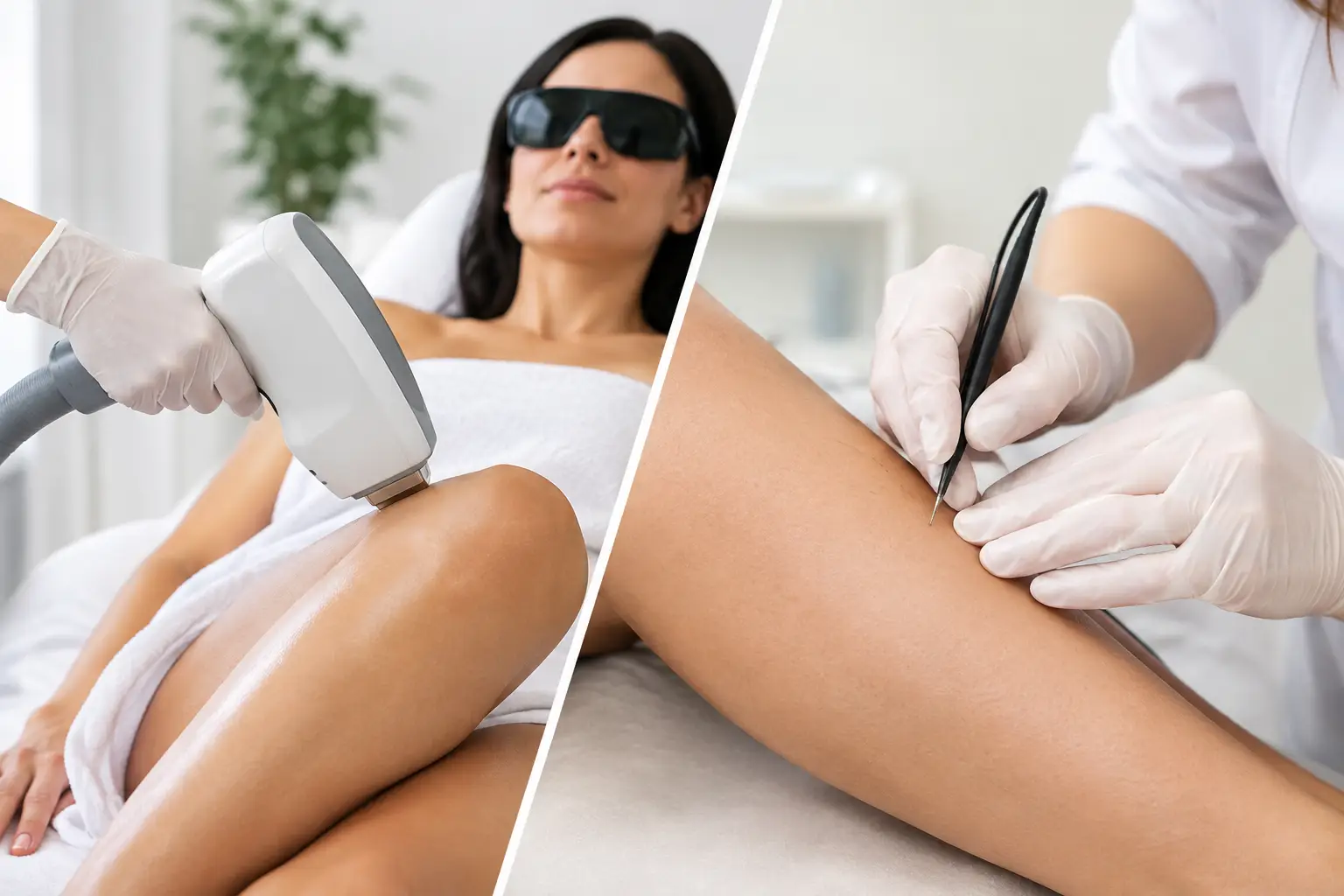
Laser Hair Removal Versus Electrolysis Compared
A few stray chin hairs may call for a very different plan than full-leg maintenance. That is why laser hair removal versus electrolysis is not a simple question of which treatment is “better.” Both can reduce unwanted hair and support a smoother, more confident routine, but they work differently, require different time commitments, and suit different hair and skin combinations.
The right choice starts with your goals. Are you hoping to reduce dense, dark hair across a larger area? Do you have a handful of light or gray hairs that seem to return no matter what? A personalized consultation can turn those details into a treatment plan that feels realistic, comfortable, and worth your investment.
How laser hair removal works
Laser hair removal uses focused light energy to target pigment, called melanin, within the hair. That energy heats the follicle to slow or reduce future hair growth without disrupting the surrounding skin. Because the laser is attracted to pigment, the treatment is generally most effective when there is a clear contrast between the hair and skin.
Hair grows in cycles, and laser treatment is most effective when hairs are in an active growth phase. Since not every follicle is active at the same time, a series of appointments is needed. Many clients begin with treatments scheduled several weeks apart, then move into occasional maintenance as needed.
The biggest advantage is coverage. Areas such as the legs, underarms, bikini line, back, chest, or upper lip can be treated relatively quickly compared with treating one follicle at a time. For someone tired of shaving every few days or managing frequent ingrown hairs, that efficiency can be a meaningful part of the appeal.
Laser hair removal is often described as permanent hair reduction, not a guarantee that every follicle will never produce hair again. Hormonal changes, genetics, and the treatment area can all affect long-term results. Hair that does return is often finer, lighter, or less dense, and maintenance sessions can help preserve your results.
Skin tone and hair color matter
Modern laser platforms can be selected and adjusted for a broad range of skin tones, but safety depends on using the appropriate technology and settings for your skin and hair. Darker skin contains more melanin, which makes an experienced provider, a careful assessment, and sometimes a test spot especially valuable. The goal is to treat the hair effectively while protecting the skin.
Laser treatment has limited success on very light blonde, gray, white, or red hair because those hairs have little pigment for the laser to recognize. If that sounds like your hair, electrolysis may offer a better path.
How electrolysis works
Electrolysis treats each individual follicle. A trained electrologist inserts a very fine probe into the natural opening of the follicle and applies a small amount of electrical energy. The treated hair is then removed with tweezers.
Unlike laser treatment, electrolysis does not rely on hair pigment. It can be used on light, gray, red, and white hair, as well as on a wide range of skin tones. It is also the only method recognized by the FDA as permanent hair removal when the follicle has been effectively treated.
That distinction is meaningful, but it comes with a trade-off: electrolysis is slow. Every follicle must be addressed separately, so a small area such as the upper lip, chin, areola, or a few isolated facial hairs may be practical. Treating large areas such as both legs can require a significant number of hours over time.
Electrolysis also works around the same growth-cycle reality. More than one session is necessary because new hairs enter the active phase at different times. Consistency matters, particularly for facial hair influenced by hormones.
Laser hair removal versus electrolysis: the key differences
For larger areas with dark, coarse hair, laser hair removal is usually the faster choice. A laser session may cover both underarms or a bikini area in a fraction of the time required for electrolysis. It can also be more economical per treated area when a series of sessions is planned.
For lighter hairs or smaller, stubborn areas, electrolysis is often more precise. It is especially useful for individual hairs that remain after laser treatments, as well as hairs that lack enough pigment to respond to a laser. Many people do not need to see these treatments as an either-or decision. Starting with laser for broad reduction and using electrolysis for the remaining lighter hairs can be a thoughtful combination approach.
Comfort is personal. Laser hair removal can feel like a quick snap of warmth against the skin, while electrolysis may feel like brief heat or a tiny pinch in each follicle. Topical numbing options, cooling methods, area size, and your natural sensitivity can all influence the experience. Your provider should explain what to expect rather than dismiss discomfort.
Cost should also be considered over the full course of treatment, not only at the first appointment. Laser is commonly priced by treatment area and may require several sessions plus maintenance. Electrolysis is commonly priced by time, and a small area may be affordable while a larger area becomes more time-intensive. Ask for a plan based on the area, hair density, and likely number of visits so you can make a confident decision.
Which treatment fits your goals?
Laser hair removal may be the stronger fit if you want to reduce dark hair on a larger area, prefer shorter appointments, or are seeking a lower-maintenance alternative to shaving and waxing. It can be an excellent option for underarms, legs, bikini areas, and other areas with dense growth.
Electrolysis may make more sense if your hair is blonde, gray, red, or white; if you are focused on a small area; or if you want individual follicles treated with precision. It can also be a helpful follow-up option after laser treatment has reduced the bulk of darker hair.
Your medical history belongs in the conversation, too. Certain medications, active skin irritation, recent tanning, a history of pigment changes, hormonal conditions, and pregnancy can affect treatment timing or the approach your provider recommends. A trustworthy consultation is not a sales pitch. It is an opportunity to talk through your skin, hair pattern, lifestyle, and expectations before beginning.
Preparing for safer, smoother results
Whether you choose laser or electrolysis, protect the treatment area from significant sun exposure and avoid tanning before your appointment. Tanned or irritated skin may need time to recover before treatment can be performed safely.
For laser hair removal, shaving is typically preferred before your visit because it leaves the follicle intact while reducing hair above the skin. Avoid waxing, plucking, and threading in the weeks leading up to treatment, since those methods remove the target hair from the follicle. Electrolysis preparation can differ because a little visible hair is needed for removal, so follow your provider’s instructions carefully.
After either treatment, mild redness or sensitivity can happen. Keep skincare gentle, avoid heat-heavy workouts and hot baths for the time recommended by your provider, and use sun protection consistently. Do not pick or exfoliate irritated skin. If you experience blistering, prolonged swelling, or unexpected discomfort, contact your treatment provider promptly.
Can I switch from waxing to laser hair removal?
Yes, but timing matters. You will need to stop waxing, plucking, or threading before laser sessions so the hair follicle remains available for treatment. Shaving is generally allowed and often recommended, but your provider will give you exact timing based on the treatment area and device.
Is electrolysis better for hormonal facial hair?
It can be a very effective option for hormonal facial hair, particularly when the hairs are light, fine, or scattered. However, hormonal shifts can encourage new follicles to become active over time. Ongoing treatment or occasional touch-ups may still be part of a realistic long-term plan.
At JFU Wellness Beauty, personalized care means looking beyond a one-size-fits-all treatment menu. The best hair-removal plan is the one that respects your skin, fits your schedule, and helps you feel more at ease in your own routine. A consultation can give you clarity before you commit, whether your goal is smoother legs, a cleaner bikini line, or freedom from a few persistent facial hairs.

Leave a Reply