
RF Skin Tightening Versus Ultherapy: Which Fits?
A jawline that looks less defined in photos, skin that no longer feels as firm as it used to, or fine lines that seem more noticeable can make you consider a non-surgical lift. When comparing RF skin tightening versus Ultherapy, the better choice is not automatically the newest treatment or the strongest-sounding technology. It is the one that matches your skin, your degree of laxity, your comfort level, and the kind of improvement you want to see.
Both treatments support collagen, the protein that helps skin look firm, smooth, and resilient. Yet they use different forms of energy, reach different tissue levels, and tend to suit different concerns. Understanding those differences can help you approach a consultation feeling informed, confident, and focused on natural-looking results.
RF Skin Tightening Versus Ultherapy: The Core Difference
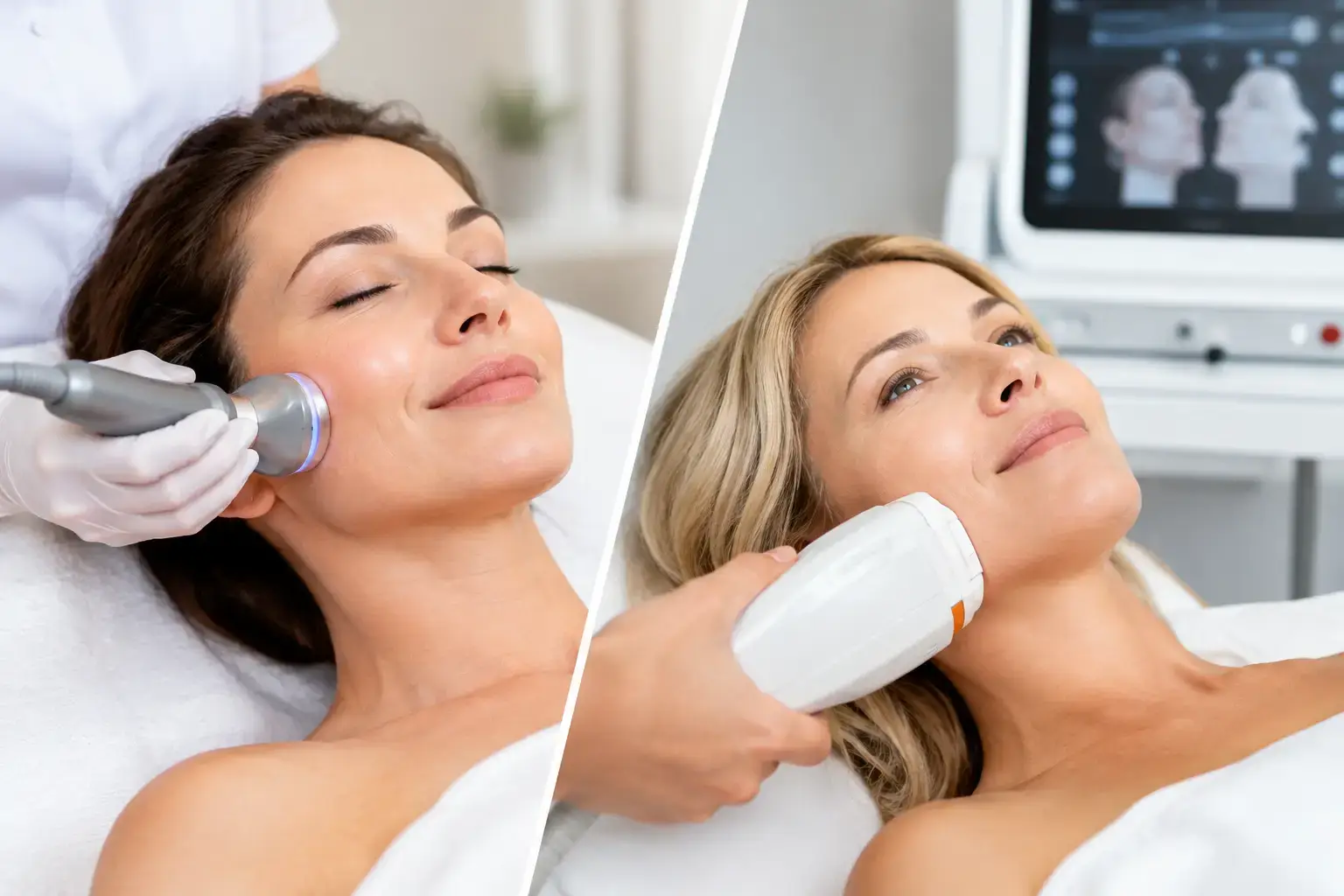
Radiofrequency, often called RF, uses controlled radiofrequency energy to gently heat the skin and underlying tissue. That heat can encourage collagen remodeling over time. Depending on the device and treatment area, RF may be used to improve mild laxity, crepey texture, fine lines, and overall skin firmness on the face, neck, or body.
Ultherapy is a specific treatment that uses microfocused ultrasound energy. Its ultrasound energy is delivered at targeted depths beneath the skin’s surface, including deeper supportive layers commonly associated with facial lifting. It is often considered by people seeking a more noticeable non-surgical lift in areas such as the brow, jawline, under-chin area, and neck.
The simplest way to think about the distinction is this: RF is often a versatile choice for gradual tightening and skin-quality support, while Ultherapy is designed with deeper lifting in mind. There is overlap, but the treatments are not interchangeable.
What RF Skin Tightening Can Do
RF skin tightening is a favorite for clients who want to care for their skin consistently without interrupting their schedule. Treatment usually feels warm, and many people return to normal activities right away. Some devices may create temporary pinkness or mild swelling, but this is generally short-lived.
RF can be particularly appealing when the concern is not only looseness, but also skin texture. A personalized series may help skin look smoother and more refreshed while supporting gradual firmness. Because collagen remodeling takes time, results typically develop over several weeks and may continue improving after a treatment series is complete.
Who may be a good RF candidate?
RF can be a thoughtful option for adults with early to moderate skin laxity who want subtle, progressive improvement. It can also work well for people who see skin tightening as part of a broader maintenance routine that may include facials, chemical peels, quality home care, or injectables when appropriate.
One advantage is flexibility. RF technology may be adapted for different areas and, with an appropriate device and trained provider, can be suitable for a wide range of skin types. Your provider should still assess your skin condition, medical history, sensitivity, and aesthetic goals before recommending treatment.
What Ultherapy Can Do
Ultherapy uses ultrasound imaging and focused energy to treat targeted layers beneath the skin. Rather than treating the surface for texture first, its purpose is to stimulate collagen in deeper tissue planes associated with visible lifting and tightening.
For the right person, Ultherapy may be especially helpful when facial contours have begun to soften. Common concerns include a less defined jawline, mild fullness or laxity under the chin, a drooping brow area, and loose skin on the neck. Results are gradual, often becoming more apparent over two to three months as new collagen develops.
Ultherapy is not a replacement for surgery. If there is significant excess skin or substantial jowling, a surgical facelift or neck lift may provide a more dramatic result. Still, for someone with mild to moderate laxity who wants improvement without incisions or extended downtime, ultrasound-based lifting can be worth discussing.
Comfort and recovery with Ultherapy
Comfort varies widely. During treatment, some clients feel brief moments of heat, tingling, or a deeper prickling sensation as energy is delivered. Providers can discuss comfort-support options in advance. Mild tenderness, swelling, or temporary redness may occur afterward, although most people can resume regular routines quickly.
The fact that there is little downtime does not mean every client should treat it casually. A proper consultation matters because placement, energy settings, anatomy, and realistic expectations all affect the experience and outcome.
Which Treatment Gives Better Results?
There is no universal winner in RF skin tightening versus Ultherapy. The best result depends on what you are trying to improve.
If your priority is overall firmness, a smoother-looking texture, and a treatment plan that can be repeated as part of ongoing skin maintenance, RF may make more sense. It is often performed as a series, and the cumulative approach can be appealing for clients who prefer gradual change.
If your main goal is a more visible lift around the lower face, neck, or brow, Ultherapy may be the stronger match. It is commonly completed in one primary session, though future maintenance can be considered as aging continues.
Skin quality also matters. Someone with fine lines, dehydration, sun-related texture changes, and mild laxity may benefit from a plan that addresses more than one concern. Tightening energy alone will not replace hydration, exfoliation, pigment correction, or volume restoration when those are part of the picture.
Treatment Time, Cost, and Commitment
Both treatments are investments in collagen, so neither delivers a facelift-like result overnight. RF typically asks for more appointment commitment because many protocols involve multiple sessions. Ultherapy often has a higher upfront cost because it is commonly performed in a single, more comprehensive treatment session.
The right comparison is not just price per appointment. Consider how many sessions are recommended, which areas you want treated, how long results may last, and whether the treatment addresses your actual concern. A lower-cost option is not a better value if it does not target the level of laxity you want to improve.
Your provider should give you clear pricing based on your treatment area and plan, rather than pushing a one-size-fits-all package. Personalized care is especially valuable for the face and neck, where subtle changes can have a meaningful effect on your confidence.
Safety and When to Wait
Both RF and ultrasound treatments should be performed by a qualified professional using appropriate technology and protocols. Before treatment, share any history of medical conditions, implanted electronic devices, metal implants in the treatment area, active skin infections, recent procedures, pregnancy, or medications that may affect healing.
A treatment may need to be postponed if your skin is irritated, sunburned, actively breaking out, or healing from another procedure. If you have rosacea, melasma, or a history of post-inflammatory hyperpigmentation, your provider can help determine whether energy treatment is appropriate and how to prepare your skin carefully.
At JFU Wellness Beauty, the goal is never to chase an overdone look. A thoughtful treatment plan starts with listening to what you see in the mirror, evaluating what your skin needs, and recommending options that support your natural features.
How to Choose With Confidence
Bring specific goals to your consultation. Instead of saying you want to look younger, explain whether you are noticing softness at the jawline, loose neck skin, fine lines around the mouth, or a tired-looking brow area. Photos from a few years ago can also help you communicate what has changed.
Ask what level of improvement is realistic, how many treatments are recommended, when you should expect results, and what can be combined safely with your plan. The best provider will be honest if RF is likely to give a gentle refinement, if Ultherapy is better suited to your goal, or if another treatment would serve you more effectively.
Choosing a skin-tightening treatment should feel like an act of self-care, not pressure to change your face. Give yourself permission to choose the option that fits your skin, your lifestyle, and the confident, refreshed version of you that still looks unmistakably like you.

Leave a Reply