
Complete Guide to Facial Exfoliation Treatments
Dullness that does not improve with moisturizer, makeup that settles into rough patches, and clogged pores that keep returning often have one thing in common: a buildup of dead skin cells. This complete guide to facial exfoliation treatments explains how professional and at-home options work, what they can realistically improve, and how to choose a method that supports your skin rather than overwhelms it.
Exfoliation is not about making skin feel squeaky-clean or aggressively smooth. Done well, it is a thoughtful part of skin maintenance that helps reveal fresher-looking skin while respecting your barrier, sensitivity level, and individual concerns. The right approach can support a brighter tone, smoother texture, clearer-looking pores, and more even product application. The wrong one can leave skin irritated, dry, or more prone to discoloration.
What Facial Exfoliation Actually Does
Your skin naturally sheds dead cells, but that process can become less efficient with age, dehydration, sun exposure, acne, and certain skin conditions. When those cells linger on the surface, they can make the complexion look rough, uneven, or lackluster. They may also mix with oil inside pores, contributing to congestion.
Facial exfoliation treatments help loosen or remove this buildup. Some work physically by polishing the surface. Others use enzymes or carefully selected acids to dissolve the bonds between dead cells. Professional treatments can reach a more meaningful level of renewal than a basic scrub, but stronger is not automatically better. The most effective treatment is the one matched to your skin’s current condition and your goals.
The Main Types of Facial Exfoliation Treatments
Physical exfoliation
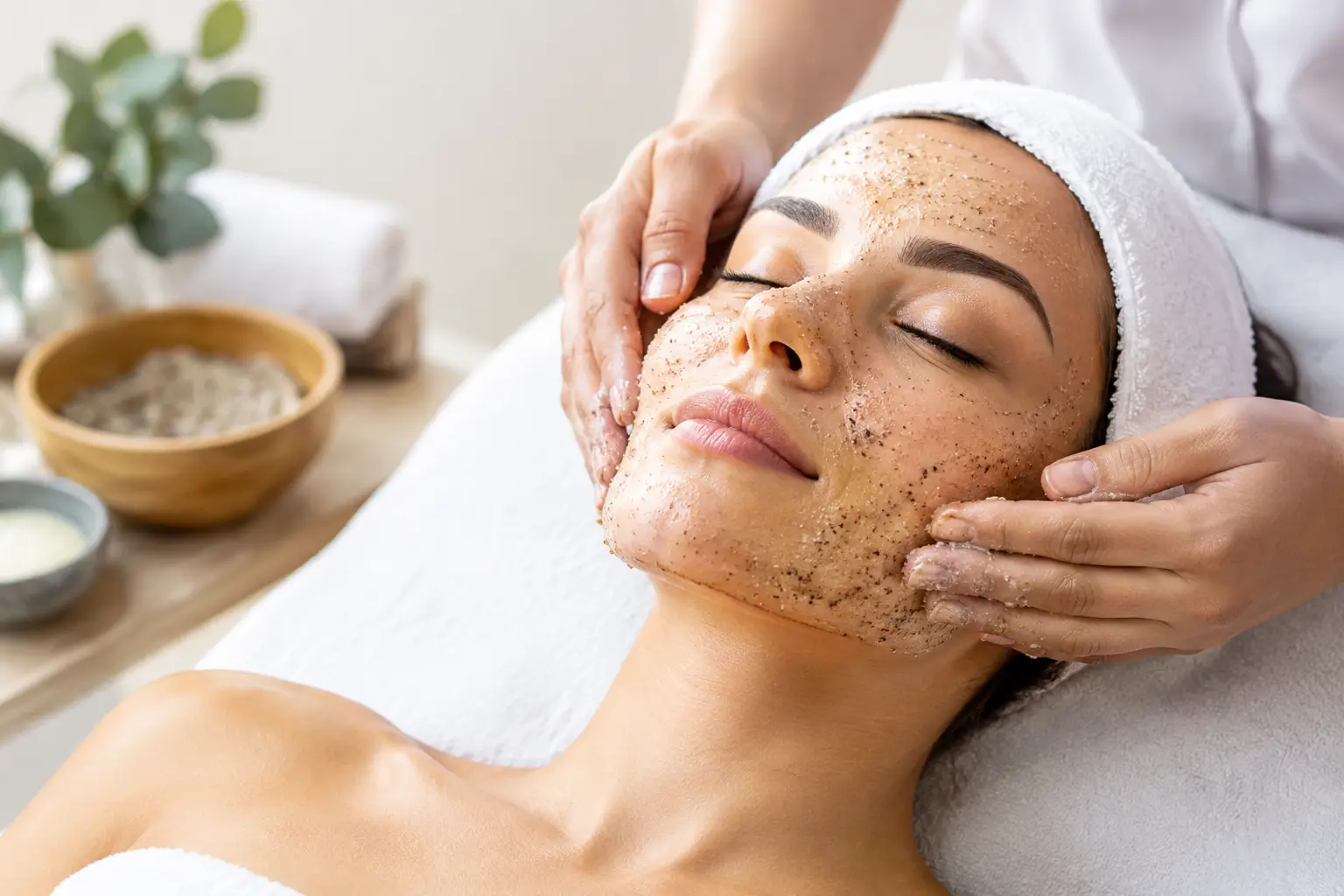
Physical exfoliation uses fine particles, a textured tool, or a professional polishing technique to lift away surface buildup. It can leave skin feeling immediately soft and refreshed, especially when dullness is mild.
This category requires a gentle hand. Rough scrubs, large abrasive particles, and vigorous rubbing can create irritation, particularly for acne-prone, rosacea-prone, sensitive, or deeper skin tones that are susceptible to post-inflammatory hyperpigmentation. Physical exfoliation may suit some clients occasionally, but it is rarely the best answer for persistent acne, fine lines, or noticeable pigmentation.
Enzyme exfoliation
Enzyme treatments use fruit- or plant-derived enzymes to help break down surface keratin, the protein found in dead skin cells. They tend to be gentler than many acid-based treatments and can be a comfortable option for clients who want a glow without significant downtime.
Enzymes are often used in professional facials because they can complement hydration, facial massage, and calming masks. They are helpful when skin looks tired or feels rough, but they may not provide the same correction as a properly selected chemical peel for more established discoloration, acne congestion, or textural concerns.
Chemical exfoliation
Chemical exfoliation uses acids in controlled formulas. Alpha hydroxy acids, such as glycolic and lactic acid, are often used to improve dullness, surface texture, and the look of fine lines. Beta hydroxy acid, commonly salicylic acid, is oil-soluble and can be especially useful for clogged pores and acne-prone skin. Polyhydroxy acids are generally larger molecules and may be a more gentle option for sensitive skin.
A chemical exfoliant can be part of a home routine, but professional chemical peels are more individualized. A provider can consider your skin tone, sensitivity, acne activity, pigment history, and recent product use before recommending a peel depth and formula. That level of customization matters. A peel that is excellent for oily, congested skin may be inappropriate for a client whose barrier is compromised or whose rosacea is flaring.
At-Home Exfoliation vs. Professional Treatments
At-home exfoliation can be useful for maintenance. A low-strength exfoliating serum, toner, or cleanser may help keep skin smoother between appointments when used correctly. The challenge is that many people layer too many active ingredients at once. Combining exfoliating acids with retinoids, strong acne products, scrubs, or frequent cleansing can quickly lead to stinging, peeling, and inflammation.
Professional exfoliation offers greater precision. During a facial or chemical peel appointment, treatment can be adjusted based on how your skin looks and feels that day. A trained provider can also guide pre-treatment preparation and post-treatment care, both of which affect the quality of your results.
For many clients, the best plan is not choosing one over the other. It is pairing periodic professional treatments with a simple home routine that protects the results. That usually means gentle cleansing, targeted products used at an appropriate frequency, moisturizer, and daily broad-spectrum sunscreen.
Choosing an Exfoliation Treatment for Your Skin Concern
Acne and congested pores
Salicylic acid and select professional peels can help reduce the buildup that contributes to blackheads and whiteheads. However, active, inflamed acne needs a careful plan. Scrubbing aggressively over breakouts can worsen irritation and increase the risk of lingering dark marks. Exfoliation may be one part of acne care, not the entire solution.
Dark spots and uneven tone
Chemical exfoliation can support a more even-looking complexion by encouraging cell turnover. Still, pigment concerns require patience and consistent sun protection. Over-exfoliating can trigger inflammation, which may make dark spots more noticeable, especially in melanin-rich skin. Gradual treatment is often the safer and more rewarding path.
Fine lines and rough texture
Lactic acid, glycolic acid, and certain professional peels can improve the look of surface texture and soften the appearance of fine lines over time. Results tend to be best when exfoliation is combined with hydration, sun protection, and a personalized skin-maintenance plan. No exfoliation treatment can replace lost volume or dramatically tighten lax skin, but it can make the surface look fresher and more refined.
Sensitive or rosacea-prone skin
Sensitive skin does not always mean you must avoid exfoliation completely. It does mean your treatment should be conservative and customized. Gentle enzymes, low-strength acids, and barrier-supportive facials may be better choices than a strong peel or a grainy scrub. If your skin burns, stays red, or feels tight after exfoliating, that is a signal to pause and reassess.
How Often Should You Exfoliate?
Frequency depends on the method, strength, and your skin’s tolerance. Some people can use a gentle chemical exfoliant once or twice weekly. Others may benefit from less frequent use, especially if they use prescription acne medication, retinoids, or have dry or reactive skin.
Professional treatments are commonly scheduled several weeks apart, allowing the skin time to respond and recover. A series of thoughtfully spaced treatments often produces more natural-looking improvement than one overly aggressive session. Your provider should help you decide whether your skin needs ongoing maintenance, a focused peel series, or a calming reset before any active treatment.
Signs You May Be Over-Exfoliating
Healthy exfoliation leaves skin comfortable, not raw. Persistent redness, increased sensitivity, flaking, shiny tightness, burning when applying basic products, and new breakouts can all indicate that your barrier is stressed. Stop exfoliating products until your skin settles, simplify your routine, and focus on gentle moisture and sunscreen.
Avoid exfoliating immediately after waxing, shaving irritation, sunburn, or any procedure that has left the skin tender. Tell your provider about medications, active skincare ingredients, allergies, and any history of cold sores before a chemical peel. Those details help make treatment safer and more appropriate.
Preparing for a Professional Exfoliation Appointment
Come to your appointment ready to discuss what you want to improve and what you use at home. Your provider may ask you to pause certain active products beforehand, particularly retinoids or exfoliating acids. After treatment, follow the recommended aftercare closely. This usually includes avoiding heat, picking, harsh products, and unprotected sun exposure while your skin recovers.
At JFU Wellness Beauty, personalized facial and chemical peel recommendations are designed around your skin goals, comfort level, and lifestyle. Whether you are managing congestion, dullness, uneven tone, or early signs of aging, your treatment plan should feel supportive, never one-size-fits-all.
Beautiful exfoliation results are usually quiet: skin that feels smoother, looks clearer, and reflects light more evenly without looking irritated or overtreated. Give your skin time, protect it from the sun, and choose care that helps your natural complexion look like its healthiest self.

Leave a Reply