

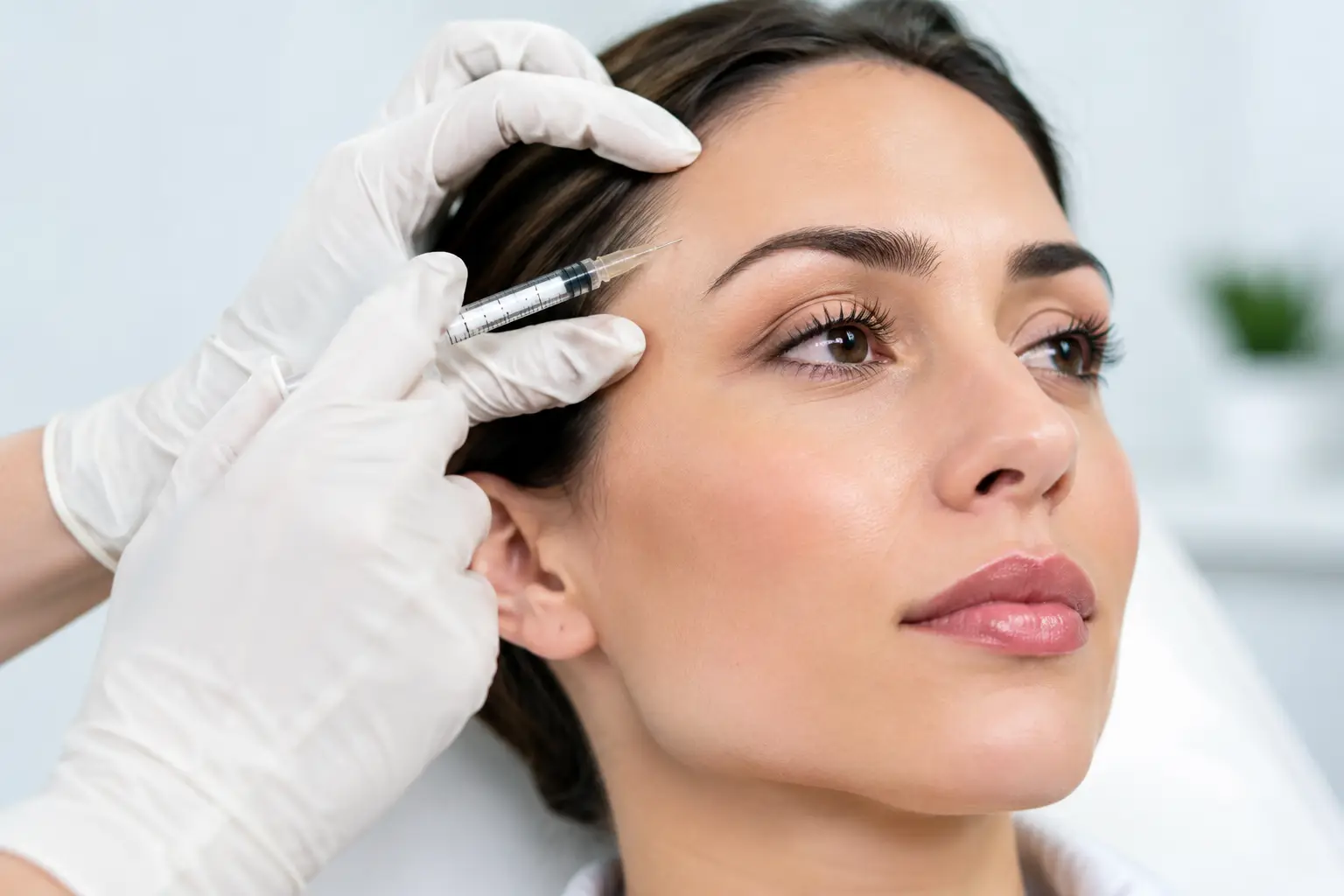
Does Botox Migrate? What Really Happens After Injections
A smooth forehead should still look like your forehead. That is why a concern such as “does Botox migrate?” deserves a clear answer before you book a treatment. When Botox is placed thoughtfully by a qualified injector, it is designed to relax very specific facial muscles, not travel freely around the face or change your features.
Still, unwanted effects such as a heavy brow or temporary eyelid droop can happen. Understanding the difference between normal treatment effects, product diffusion, and true complications can help you make a confident, informed decision about your injectable care.
Does Botox Migrate After Injection?
In everyday conversation, people often use the word migrate to describe any Botox result they did not expect. Medically, the more accurate term is usually diffusion. Botox can spread a small distance from the injection site into nearby tissue. This is one reason injection technique, dose, depth, and facial anatomy matter so much.
Botox does not typically move throughout your body after a cosmetic treatment or drift from your forehead to your lips weeks later. At the small, carefully measured doses used for aesthetic treatment, it works locally at the nerve-muscle connection near where it was injected. The intended effect is temporary relaxation of the selected muscle, which softens lines created by repeated movement.
A little local diffusion is not automatically a problem. In fact, injectors account for it when planning treatment. The concern arises when Botox reaches a nearby muscle that was not meant to be relaxed. For example, if product affects a muscle involved in lifting the eyelid, a temporary eyelid droop may occur.
Why Unwanted Botox Effects Can Happen
Natural-looking Botox is not simply about using fewer units. It is about using the right amount, in the right location, for your individual muscle strength and facial balance. Two people can receive treatment in the same area and need very different plans.
Several factors can affect the outcome. These include the injector’s understanding of facial anatomy, the placement and depth of each injection, the amount of product used, and how active or strong your facial muscles are. Your baseline brow position also matters. Someone with a naturally low brow or mild lid heaviness may need a more conservative approach to forehead treatment than someone with a higher brow position.
Certain health conditions, previous eyelid surgery, existing facial asymmetry, and medications or supplements should also be discussed before treatment. This is not about making treatment feel intimidating. It is how a careful provider identifies the details that help protect a balanced result.
Aftercare may play a role as well. Avoid rubbing, massaging, or applying heavy pressure to freshly treated areas unless your provider specifically instructs you otherwise. It is also wise to follow their guidance about exercise, lying flat, facial treatments, and heat exposure during the first several hours. These recommendations are simple, but they support a calm recovery period while the product begins to settle.
A Heavy Brow Is Not Always Migration
The forehead and brow work as a team. The frontalis muscle lifts the brows, while muscles between and around the brows pull downward. If the forehead is treated too strongly for your anatomy, the brow can feel lower or heavier because its lifting muscle is more relaxed. This is often called brow ptosis, and it is different from Botox traveling across the face.
Sometimes the feeling is more noticeable than the visible change. If you are used to raising your forehead often, a smoother, quieter forehead can initially feel unusual. It can also reveal an existing tendency toward hooded lids or brow asymmetry that your muscle movement had been compensating for.
This is why a customized plan matters. A skilled injector evaluates your expressions before treatment, not just the lines visible when your face is at rest. The goal is to soften unwanted lines while preserving the movement and support that make your expression look like you.
How Long Does Botox Take to Settle?
Botox does not reach its final result the moment you leave your appointment. Many clients begin noticing a change within three to five days, while the full result usually develops around 10 to 14 days. During this window, one side may seem to respond faster than the other, especially if your facial muscles are naturally uneven in strength.
Give the treatment time before judging the final outcome. Booking a follow-up assessment around two weeks, when recommended by your provider, creates an opportunity to review the result and discuss whether a small adjustment is appropriate. Adding more Botox too early can make it harder to judge what your muscles truly need.
Most cosmetic Botox results last about three to four months, though this varies with the treatment area, your metabolism, muscle activity, and dose. If an unintended nearby muscle is affected, the effect is also temporary. Your provider can explain what to expect based on the specific concern and may recommend supportive strategies while it improves.
When to Call Your Injector
Contact your injector if you notice a new eyelid droop, a significant brow heaviness, pronounced asymmetry, or a result that concerns you. Take clear photos in good lighting, both at rest and while making the expression involved, if they ask you to send images. This can help them assess the change accurately.
Do not try to correct a concern with an at-home massage, extra facial pressure, or treatments from another provider before speaking with the person who treated you. A quick fix can complicate your result. A thoughtful evaluation is the safer path.
Serious reactions after cosmetic Botox are uncommon, but urgent medical care is needed for symptoms such as trouble breathing, swallowing, or speaking; generalized weakness; or signs of an allergic reaction, including hives or swelling. These symptoms should never be managed through a routine follow-up message.
How to Reduce the Risk of Botox Migration Concerns
The best prevention begins before the injection. Choose a qualified, experienced medical provider who performs a detailed facial assessment and welcomes questions about technique, dose, and your desired level of movement. Share your complete health history and be honest about previous injectables, surgeries, and any past reaction to treatment.
Bring reference photos if you have a result you love, but remember that your plan should be built around your face, not copied from someone else’s. If you are new to Botox, conservative treatment can be a smart starting point. You can always build gradually at a follow-up appointment. It is much harder to reverse an over-treated muscle while waiting for Botox to wear off.
At JFU Wellness Beauty, personalized neuromodulator treatment is centered on softening lines with a refreshed, natural-looking finish. Whether Botox or Xeomin is the better option for your goals, your treatment should feel collaborative, never rushed or one-size-fits-all.
A good Botox result should support your confidence, not make you second-guess your expression. Ask questions, choose careful hands, and give your face the individualized plan it deserves.

Leave a Reply