

How to Tighten Loose Skin Without Surgery
Loose skin often shows up at the exact moment you start feeling proud of your progress. Maybe you lost weight, had a baby, noticed more laxity along the jawline, or realized your neck and lower face do not bounce back the way they used to. If you are wondering how to tighten loose skin, the right answer depends on why it happened, where it is happening, and how much change you want to see.
There is no single fix for every face or body. Skin tightening works best when the plan matches your skin quality, collagen levels, age, treatment area, and timeline. For some people, better hydration, strength training, and consistent skincare make a visible difference. For others, professional treatments are what move the needle.
What causes skin to become loose?
Loose skin is usually tied to collagen and elastin loss. These are the structural proteins that help skin stay firm, springy, and smooth. As we age, production slows down. Sun exposure speeds that process up, and so do smoking, stress, poor sleep, and long periods of dehydration.
Weight changes also matter. When skin has been stretched for a long time, whether from pregnancy or weight gain, it may not fully snap back after the body changes. Genetics play a role too. Some people naturally hold onto firmness longer, while others notice sagging earlier, especially around the eyes, cheeks, neck, arms, stomach, and thighs.
This is why two people can follow the same routine and get different results. Skin laxity is personal, and your treatment plan should be too.
How to tighten loose skin at home
At-home care will not create a surgical-level result, but it can absolutely support firmer-looking skin and help maintain professional treatment results. The key is consistency.
Start with skincare that supports collagen and skin barrier health. Retinoids are one of the most studied ingredients for improving skin texture and encouraging cell turnover. Peptides can help support firmness, and antioxidants such as vitamin C help defend against the free radical damage that breaks collagen down faster. Hyaluronic acid does not tighten skin on its own, but it can improve hydration and make skin look smoother and healthier.
Daily sunscreen matters more than many people realize. If your skin is getting ongoing UV damage, collagen loss continues even while you are trying to correct it. A well-chosen SPF is not just prevention. It protects the progress you are making.
Lifestyle also matters. Strength training can improve the appearance of loose skin after weight loss by building muscle under the skin. Stable weight is important too. Repeated gain and loss tends to stress the skin further. A protein-rich diet, enough water, and sleep that actually allows the body to recover all support skin quality over time.
Still, there is a limit. If skin laxity is moderate or significant, topical products and healthy habits are supportive, not transformative.
When non-surgical treatments make the biggest difference
If you want more visible tightening without surgery, in-office treatments are usually the most effective option. These treatments work by stimulating collagen remodeling under the surface of the skin. Instead of pulling skin tight instantly, they encourage your body to rebuild support gradually.
That is why realistic expectations matter. Most non-surgical skin tightening treatments improve mild to moderate laxity. They can firm, smooth, and refine. They generally do not replace surgical lifting when skin is very loose or hanging significantly.
RF skin tightening
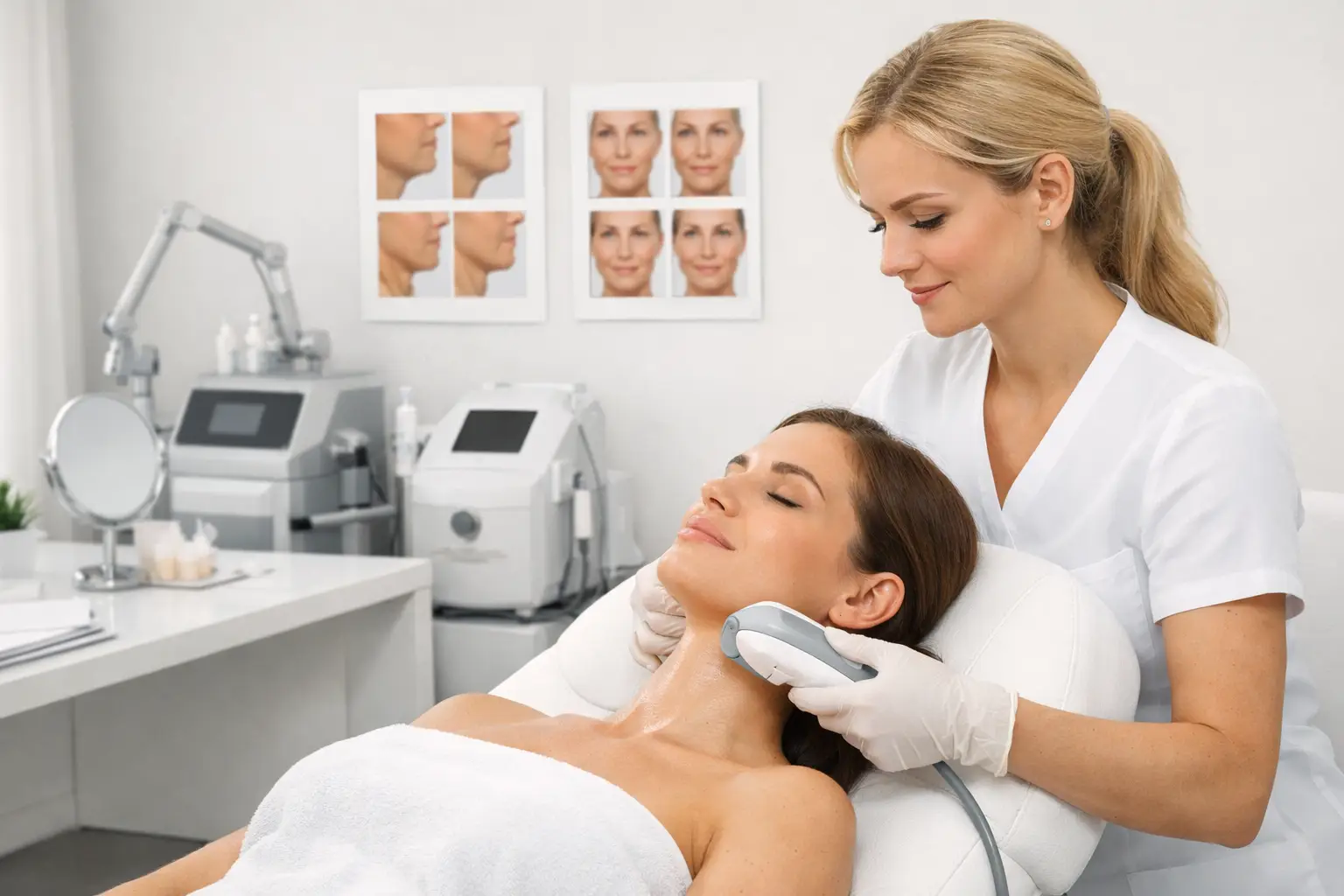
Radiofrequency, often called RF skin tightening, is one of the most popular options for a reason. It uses controlled heat to stimulate collagen production in deeper layers of the skin. Over time, that can improve firmness, texture, and overall skin tone.
RF is commonly used on the face, jawline, neck, and body. It can be a strong fit for clients who want a non-invasive treatment with little to no downtime. Results tend to build gradually over a series of sessions, which appeals to people who want natural-looking improvement rather than an obvious sudden change.
The trade-off is patience. You usually will not walk out looking dramatically tighter after one visit. RF works best as a treatment plan, not a one-time fix.
Ultrasound-based tightening
Ultrasound energy targets deeper tissue layers to trigger collagen renewal. This type of treatment can be helpful for lifting and firming areas such as the lower face, neck, and under-chin region. It reaches deeper than many surface-level treatments, which is why it is often considered for age-related laxity.
Some people respond very well, especially when skin laxity is still in the mild to moderate range. Others may need a combination approach if texture, volume loss, and sagging are all part of the concern.
Cold plasma and skin rejuvenation treatments
Cold plasma treatments are often chosen for skin rejuvenation, healing support, and overall skin quality. While they are not the same as deep tissue tightening treatments, they can complement a plan focused on smoother, healthier-looking skin. In many cases, the best visible results come from improving both firmness and texture rather than treating laxity in isolation.
Injectable support for targeted areas
People are sometimes surprised to learn that injectables can indirectly support a tighter, more refreshed look. Neuromodulators such as Botox or Xeomin do not tighten loose skin itself, but they can soften expression lines that make aging appear more pronounced. In the right client, that can make the face look smoother and more rested.
If volume loss is contributing to sagging, a provider may also discuss whether restoring support in certain areas would help. Loose skin and volume loss often happen together, especially in the mid-face and around the mouth.
The best treatment depends on the area
Facial skin and body skin do not respond the same way. Thin skin around the eyes and neck needs a different strategy than skin on the abdomen or thighs. That is one reason online advice can feel frustrating. A solution that works beautifully for jawline laxity may not be the right answer for postpartum abdominal skin.
For the face and neck, collagen-stimulating treatments are often the first place to start. For the body, the plan may involve skin tightening technology plus body contouring support, depending on whether the concern is truly loose skin, residual fat, or both.
This distinction matters. Sometimes a client says she wants to tighten skin, but what she is really noticing is fullness under the chin or through the midsection. In other cases, the issue is skin laxity after weight loss, not volume. A good consultation separates those concerns so the treatment actually fits the goal.
What results can you realistically expect?
This is where honesty matters most. Non-surgical treatments can absolutely improve loose skin, but they work on a spectrum. Mild laxity may respond well and relatively quickly. Moderate laxity often improves with a series. More advanced sagging may look better, but not fully corrected, without surgery.
Age also affects response. Younger skin generally has more collagen-building capacity, which can make treatment more efficient. That does not mean older clients cannot get meaningful improvement. It simply means timelines and expectations should be adjusted accordingly.
Maintenance matters too. Once collagen is stimulated, you still want to protect it. Sun protection, healthy skin habits, and occasional follow-up treatments can help preserve results longer.
How to choose the right provider for loose skin treatment
When you are deciding how to tighten loose skin, technology matters, but evaluation matters even more. The best provider will look at your skin quality, not just offer the newest machine. They should explain what the treatment can do, what it cannot do, how many sessions may be needed, and whether your goals are realistic.
Personalization is especially important if you want natural-looking results. A thoughtful plan can improve firmness without making you feel overtreated or pushed into services you do not need. At JFU Wellness Beauty, that customized approach is part of what helps clients feel supported from the first consultation onward.
If you are unsure where to begin, start by focusing on the concern that bothers you most. Is it your jawline, neck, stomach, arms, or overall skin texture? Is your goal prevention, visible firming, or a bigger transformation? Those answers help shape the right next step.
Loose skin can be frustrating, but it is not something you have to guess your way through. The best approach is usually a blend of steady home care, realistic expectations, and treatments chosen for your skin rather than a trend. When the plan is right, tighter-looking skin tends to come from progress you can see and confidence you can feel.

Leave a Reply