

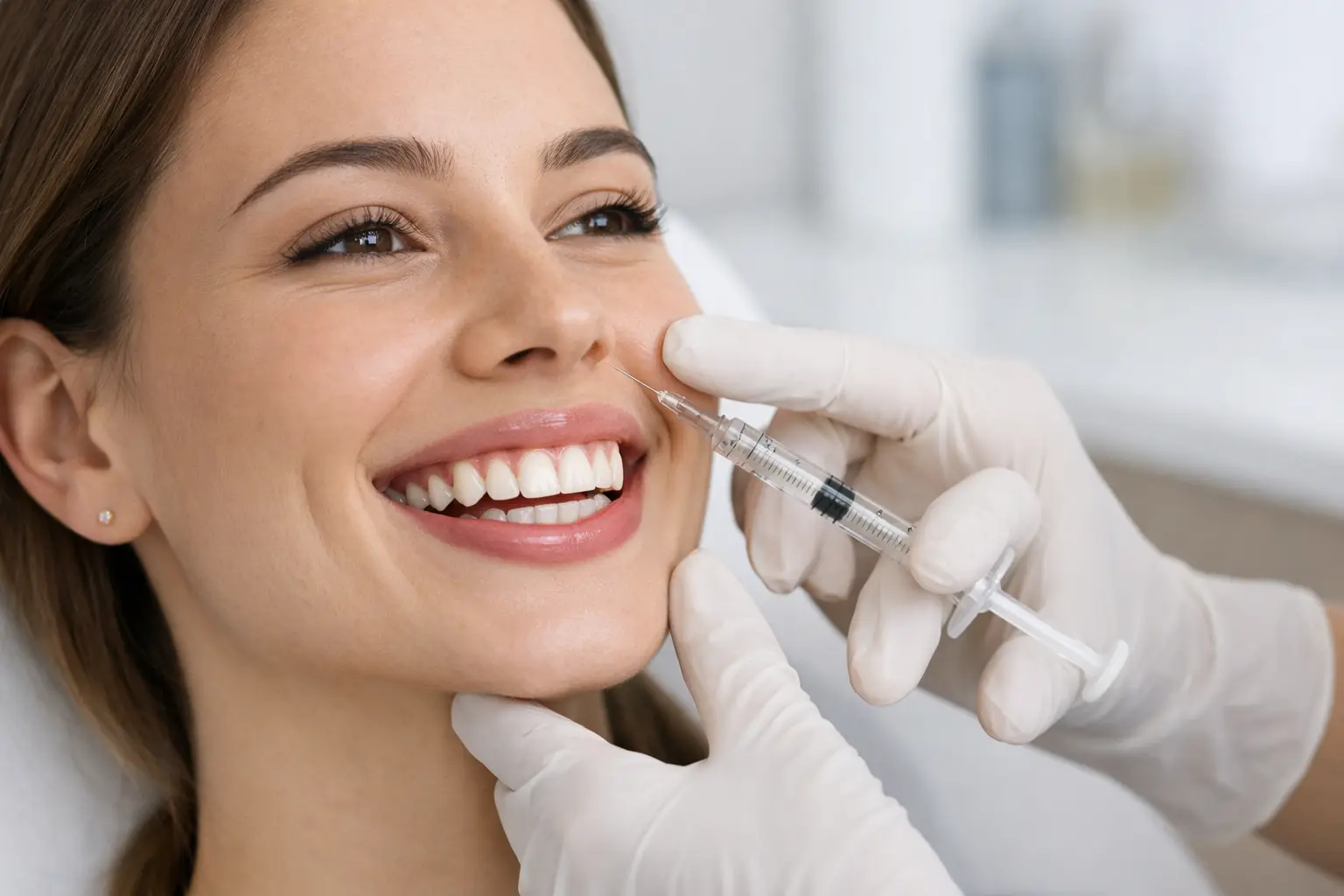
Botox for Gummy Smile: Is It Right for You?
A smile can feel like your best feature until you notice more gum showing than you would like in photos, conversations, or the mirror. Botox for gummy smile is a quick, non-surgical option that can reduce how far the upper lip rises when you smile, creating a softer, more balanced look without changing the character of your expression.
For many clients, the goal is not to erase the gumline completely. It is to feel more relaxed smiling fully. The right treatment is subtle, personalized, and designed to let your natural beauty come through.
What Causes a Gummy Smile?
A gummy smile is simply a smile that shows a larger amount of upper gum tissue. There is no single definition of what is “too much” because beauty is personal, and many people love the way their smile looks. Treatment is an option only when the amount of gum display bothers you.
The cause matters because it determines whether neuromodulator injections are likely to help. In many cases, the upper lip muscles are especially active. When you smile, these muscles lift the lip higher than desired and reveal more of the gums.
Other causes can include a shorter upper lip, smaller-looking teeth from wear or gum coverage, tooth position, or the way the upper jaw developed. When the concern is mostly muscular, Botox may be a simple and effective fit. When it is caused by gum tissue, teeth, or bone structure, a different dental or surgical approach may offer a better result.
This is why a thoughtful consultation matters. Rather than treating every gummy smile the same way, an experienced provider evaluates your facial movement, lip shape, smile line, and the amount of gum visible at rest and during a natural smile.
How Botox for Gummy Smile Works
Botox is a neuromodulator, meaning it temporarily relaxes targeted muscle activity. For a gummy smile, tiny, precise injections are placed in the muscles that pull the upper lip upward. As those muscles soften, the upper lip does not lift quite as high when you smile.
The treatment does not fill the lips, change your teeth, or make your face look frozen. When properly placed and conservatively dosed, it simply helps the upper lip rest in a slightly lower position during a smile.
Results should look like you, not a different version of you. You can still laugh, speak, sip from a straw, and make normal facial expressions. The difference is typically most noticeable in the moment you smile broadly.
What the appointment feels like
The injection portion of treatment is usually very brief, often taking only a few minutes. Your provider will ask you to smile naturally and may assess your lip movement from several angles before marking the injection points.
Most clients describe the injections as small pinches. A topical numbing option may be available, though many people do not need it for this area. There is little to no downtime, so it can fit comfortably into a busy Houston schedule.
You may see minor redness, tenderness, or a small bump at an injection site right after treatment. These effects are generally temporary. Bruising is possible, especially for clients who are prone to it or take certain medications or supplements.
When Will You See Results?
Botox does not create an instant change. Initial softening may begin within a few days, with results continuing to develop over roughly one to two weeks. Your provider may recommend evaluating your final result at about two weeks, when the treatment has had time to settle.
For most people, the effect lasts around three to four months. Metabolism, muscle strength, dose, and personal response all play a role. Clients who enjoy their result often schedule maintenance appointments a few times per year to keep their smile looking consistently balanced.
Because this is a temporary treatment, it can be a reassuring first step for someone who is curious about changing their smile but does not want a permanent procedure. It also allows your provider to refine future dosing based on how your facial muscles respond.
Who Is a Good Candidate?
A good candidate is generally an adult who shows excess upper gum primarily because their upper lip rises strongly when smiling. You should be in good general health, have realistic expectations, and want a temporary, non-surgical solution.
This treatment can be especially appealing if you want improvement without altering your teeth or committing to more involved dental work. It may also be an option for someone who has already explored dental treatments and wants to address remaining lip elevation.
Botox for a gummy smile is not the right choice for everyone. If significant gum display is related to the jaw, tooth alignment, excessive gum tissue, or another dental concern, you may benefit from an evaluation with a dentist, orthodontist, or oral and maxillofacial specialist. In some cases, combining professional perspectives leads to the most satisfying plan.
Neuromodulator treatment may not be appropriate during pregnancy or breastfeeding, or for people with certain neurological conditions, infections at the treatment site, or known allergies to product ingredients. Share your full health history, medications, supplements, and previous injection experience during your consultation. Safety starts with an honest conversation.
Natural Results Depend on Precision
The upper lip is a small area with a big role in expression. Too much relaxation can make the lip feel heavy, alter the way a smile looks, or affect certain movements temporarily. Too little may not provide enough visible improvement. Placement and dosage are not one-size-fits-all.
That is why a natural-looking approach is so valuable. At JFU Wellness Beauty, treatment planning focuses on your individual facial anatomy and the look you want to achieve. Some clients want a modest reduction in gum display, while others prefer a more noticeable softening. Both goals deserve a careful, balanced plan.
An experienced injector should also explain that gummy-smile treatment is commonly performed as an off-label use of Botox. “Off-label” means the product is being used in a way not specifically listed in its FDA-approved labeling. It does not automatically mean unsafe, but it does reinforce the importance of receiving treatment from a qualified medical aesthetic provider who understands facial anatomy and proper dosing.
Preparing for Your Appointment and Aftercare
Come to your appointment ready to discuss what you notice about your smile. Photos can be helpful, particularly if you have a favorite image where you love your smile and another where you feel self-conscious. This gives your provider useful context beyond measurements alone.
To reduce the chance of bruising, ask your provider whether you should avoid alcohol, aspirin, anti-inflammatory medications, fish oil, vitamin E, or other blood-thinning supplements before treatment. Never stop prescribed medication without guidance from the clinician who manages it.
After your injections, follow the specific instructions you are given. Providers commonly advise clients to avoid rubbing or massaging the treated area and to remain upright for a period after treatment. You may also be asked to postpone strenuous exercise, excessive heat, or facial treatments until advised otherwise.
If you experience unusual symptoms, significant weakness, trouble speaking or swallowing, breathing difficulties, or signs of an allergic reaction, seek medical attention promptly. These reactions are uncommon, but knowing when to reach out is part of responsible care.
Botox Versus Other Gummy Smile Treatments
Neuromodulator injections are often the least invasive way to address a muscle-driven gummy smile. They are quick, temporary, and require minimal recovery. The trade-off is that results need maintenance, and they cannot correct structural concerns involving gums, teeth, or the jaw.
Depending on the cause, other options may include gum contouring, orthodontics, veneers or crowns, lip repositioning surgery, or jaw surgery. These treatments vary widely in cost, recovery, permanence, and suitability. A conservative injectable approach can be an excellent choice for the right client, but it should never be presented as the only answer.
A confident smile should still feel like your own. If gum display has been holding you back from smiling freely, a personalized consultation can help you understand whether a subtle lip-relaxing treatment is the right next step for you.

Leave a Reply