
Facial Treatments for Menopausal Skin That Work
When your usual moisturizer suddenly feels like it disappears, makeup starts settling into fine lines, and your complexion looks less bright than it once did, the change can feel frustrating. Facial treatments for menopausal skin can help address these shifts with a thoughtful plan that supports comfort, hydration, tone, and natural-looking firmness without pushing skin too far.
Menopause is not a one-size-fits-all skin experience. Some women notice persistent dryness and sensitivity, while others develop breakouts, dark spots, flushing, or more visible pores. The most effective approach starts with listening to what your skin is doing now, not treating it according to a routine that worked ten years ago.
Why Menopausal Skin Needs a Different Approach
Declining estrogen affects several functions that keep skin looking smooth and resilient. Collagen production slows, oil production may decrease, and the skin barrier can become less efficient at holding moisture. Skin may feel thinner or more reactive, especially around the eyes, cheeks, neck, and jawline.
At the same time, sun exposure from earlier decades can become more visible as pigmentation, uneven tone, and textural changes. Hormonal shifts can also trigger adult acne around the chin and jaw. That combination is why a stronger treatment is not automatically a better treatment. Over-exfoliating dry, reactive skin may worsen redness and irritation, while doing too little may leave texture and dullness unaddressed.
A personalized treatment plan balances renewal with barrier support. It should account for your skin tone, sensitivity, current skincare products, medications, history of pigmentation, and the amount of downtime you are comfortable with.
Facial Treatments for Menopausal Skin: Your Best Options
Customized hydrating facials
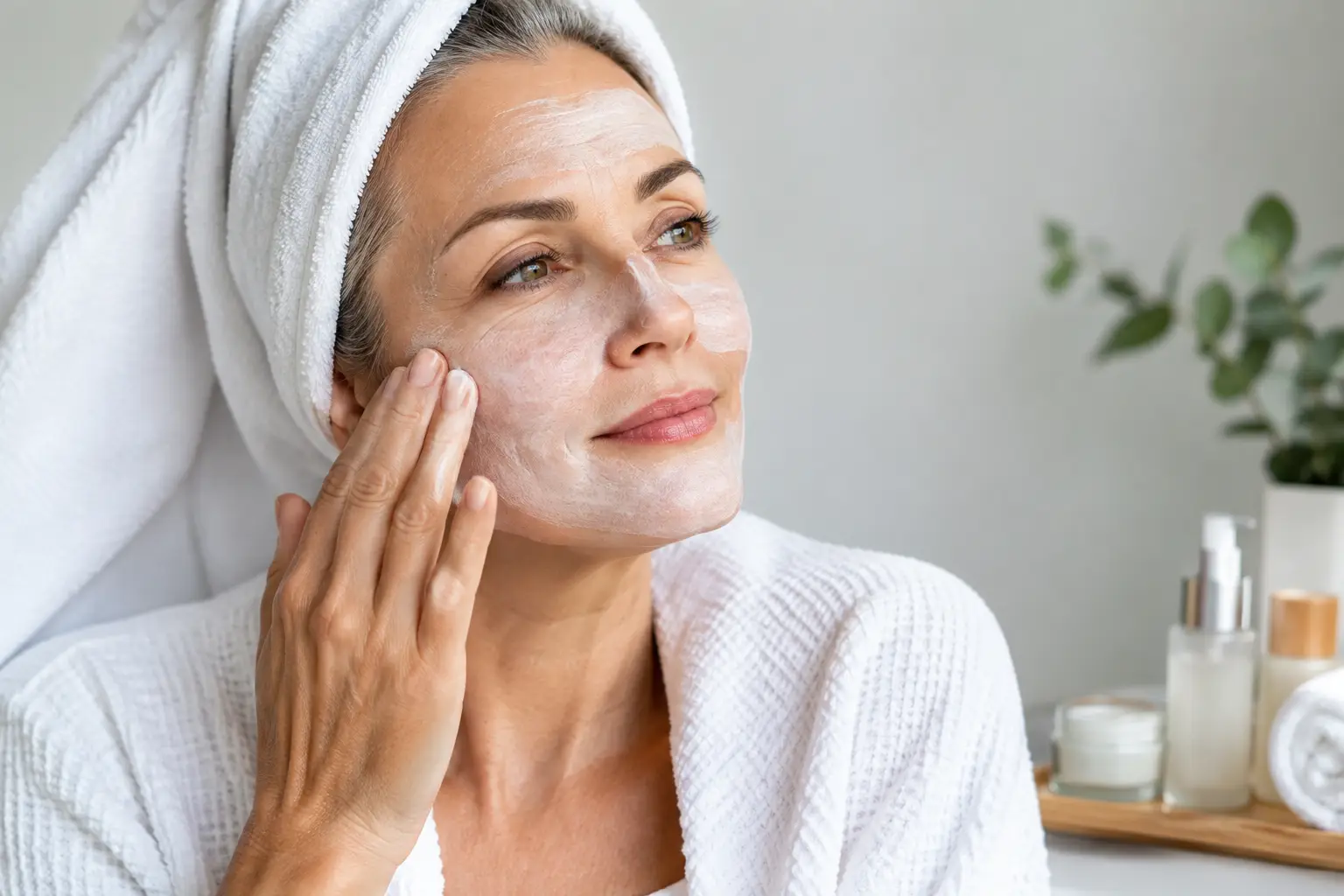
A professional facial is often the right place to begin, particularly if your skin feels tight, dull, flaky, or easily irritated. A customized facial can focus on gentle cleansing, light exfoliation when appropriate, hydration, calming ingredients, and nourishing massage. The goal is to help skin look more rested and comfortable rather than leave it feeling stripped.
For menopausal skin, a provider may adjust steam, exfoliation, and extraction techniques based on sensitivity. This matters because skin that once tolerated frequent scrubs or strong acids may need a gentler touch. Regular facials can also give your provider a clear view of how your skin is responding over time, allowing your plan to evolve with you.
Chemical peels for tone and texture
Chemical peels can be an excellent option for uneven texture, dullness, mild discoloration, enlarged pores, and fine lines. The key is selecting the right type and strength. Superficial peels can encourage fresh-looking skin with little to no visible downtime, while stronger peels may target more pronounced concerns but require more preparation and recovery.
If you are prone to melasma, post-inflammatory hyperpigmentation, or sensitivity, peel selection should be especially cautious. More aggressive is not necessarily more effective. A series of well-chosen, professional treatments may produce a more even, reliable improvement than one intense peel that leaves skin inflamed.
Before a peel, share any use of retinoids, exfoliating acids, prescription acne products, or recent waxing. These details help your provider protect your skin barrier and choose an appropriate protocol.
RF skin tightening for gradual firmness
Radiofrequency, or RF, skin tightening uses controlled heat to support collagen remodeling in targeted areas. It can be a fitting choice if your main concerns are mild laxity, a less-defined jawline, crepey texture, or fine lines that have become more noticeable as collagen has declined.
Results are gradual, which is a benefit for clients who want a refreshed, natural-looking change rather than a dramatic shift overnight. Most people need a series of sessions, and maintenance treatments may help sustain the result. RF is not a substitute for surgery when laxity is significant, but it can be a valuable non-surgical option for improving the look of firmness with minimal disruption to your schedule.
Cold plasma therapy for skin renewal
Cold plasma therapy is a non-invasive treatment that may support skin renewal, improve the appearance of texture, and help create a clearer, more luminous complexion. Depending on your concerns and the treatment plan, it may be used as part of a broader approach for uneven tone, signs of aging, or acne-prone skin.
This is where a consultation matters. Menopausal skin can be dry in some areas and congested in others. A provider can determine whether cold plasma therapy fits your skin goals, whether another treatment should come first, and how to space sessions for a comfortable experience.
Facial massage for circulation and relaxation
Facial massage is not simply a pampering add-on. With the right technique, it can ease facial tension, encourage a refreshed appearance, and give dry, tired-looking skin a welcome moment of care. Many clients hold tension in the jaw, forehead, and brow without realizing it, especially during stressful seasons of life.
Massage will not replace collagen-stimulating treatments or erase deep wrinkles, but it pairs beautifully with a hydrating facial. For women who want a calming treatment with no downtime, this can be an especially satisfying part of a maintenance routine.
Neuromodulators for expression lines
Botox and Xeomin are neuromodulator injections that can soften the appearance of dynamic lines created by repeated facial movement, such as frown lines, forehead lines, and crow’s feet. They do not improve skin hydration or texture, so they are often most effective when paired with a skin-focused plan rather than viewed as a complete facial rejuvenation strategy.
A careful, customized approach is essential. The goal at JFU Wellness Beauty is to preserve your expression while helping you look more rested and confident, not frozen or overdone. Treatment timing and dosage should reflect your facial anatomy, preferences, and desired level of movement.
Building a Treatment Plan That Respects Your Skin
The ideal schedule depends on your primary concern. If dryness and sensitivity are at the top of the list, begin with barrier-supportive facials and a simple home routine before considering exfoliating treatments. If pigmentation and texture are more noticeable, a provider may recommend a measured series of chemical peels with diligent sun protection. If loss of firmness is the concern, RF skin tightening can be incorporated over several appointments.
Combining services can be helpful, but piling on treatments is not the same as creating a good plan. Skin needs time to respond. A skilled provider will sequence treatments thoughtfully, monitor changes, and make adjustments when your skin tells us it needs more recovery or more targeted support.
Your home care also affects your results. A gentle cleanser, moisturizer suited to your skin type, daily broad-spectrum sunscreen, and carefully selected active ingredients can make professional treatments work harder. If you are introducing retinol, vitamin C, exfoliating acids, or pigment-focused products, do so gradually. Menopausal skin often rewards consistency more than intensity.
What to Expect After Treatment
Many hydrating facials and facial massage treatments have little to no downtime, although some temporary pinkness is possible. Superficial chemical peels may cause mild tightness, flaking, or peeling for several days. RF treatments can create temporary warmth or redness. Your provider should explain realistic recovery expectations before treatment, along with the aftercare that protects your results.
Avoid trying a new aggressive treatment right before a major event. Give yourself room for your skin to settle, especially with peels or any collagen-stimulating service. And if you have active rashes, an unexplained skin reaction, a history of cold sores, or a medical condition affecting healing, disclose it before your appointment.
Menopause can change your relationship with your skin, but it does not mean you have to settle for feeling uncomfortable or disconnected from your reflection. A personalized consultation can turn scattered concerns into a clear, gentle plan that supports healthy-looking skin and lets your confidence show through.

Leave a Reply