

Best Facial for Sensitive Skin: What Works
If your skin flares up from a new cleanser, turns red after exfoliation, or feels tight for days after a spa treatment, you are not being difficult – your skin is asking for a different approach. The best facial for sensitive skin is not the strongest or the trendiest one. It is the one that respects your skin barrier, calms inflammation, and improves your complexion without leaving you irritated afterward.
Sensitive skin needs thoughtful treatment, not guesswork. That matters because many facials are designed to stimulate, resurface, or deeply extract, and those goals can backfire when your skin is already reactive. A good sensitive-skin facial should leave your skin feeling comfortable, hydrated, and balanced, with gradual improvement over time rather than one dramatic but stressful session.
What makes a facial the best facial for sensitive skin?
The right facial starts with what it avoids. Sensitive skin usually does better with low-friction cleansing, mild exfoliation if any, barrier-supporting hydration, and ingredients that reduce visible redness. The wrong facial often includes harsh acids, aggressive scrubbing, strong fragrances, excessive heat, or extractions that go too far.
That is why customization matters so much. Sensitive skin is not one single condition. For some people, it shows up as frequent redness. For others, it looks like dryness, stinging, rosacea-prone flare-ups, or acne that gets worse after strong products. A facial should be adjusted to your triggers, your goals, and your current skin condition on that day.
In a professional setting, the best results usually come from treatments that focus on soothing and restoring first. Once the skin is healthier and more stable, more corrective options can be added carefully if needed.
The best facial types for sensitive skin
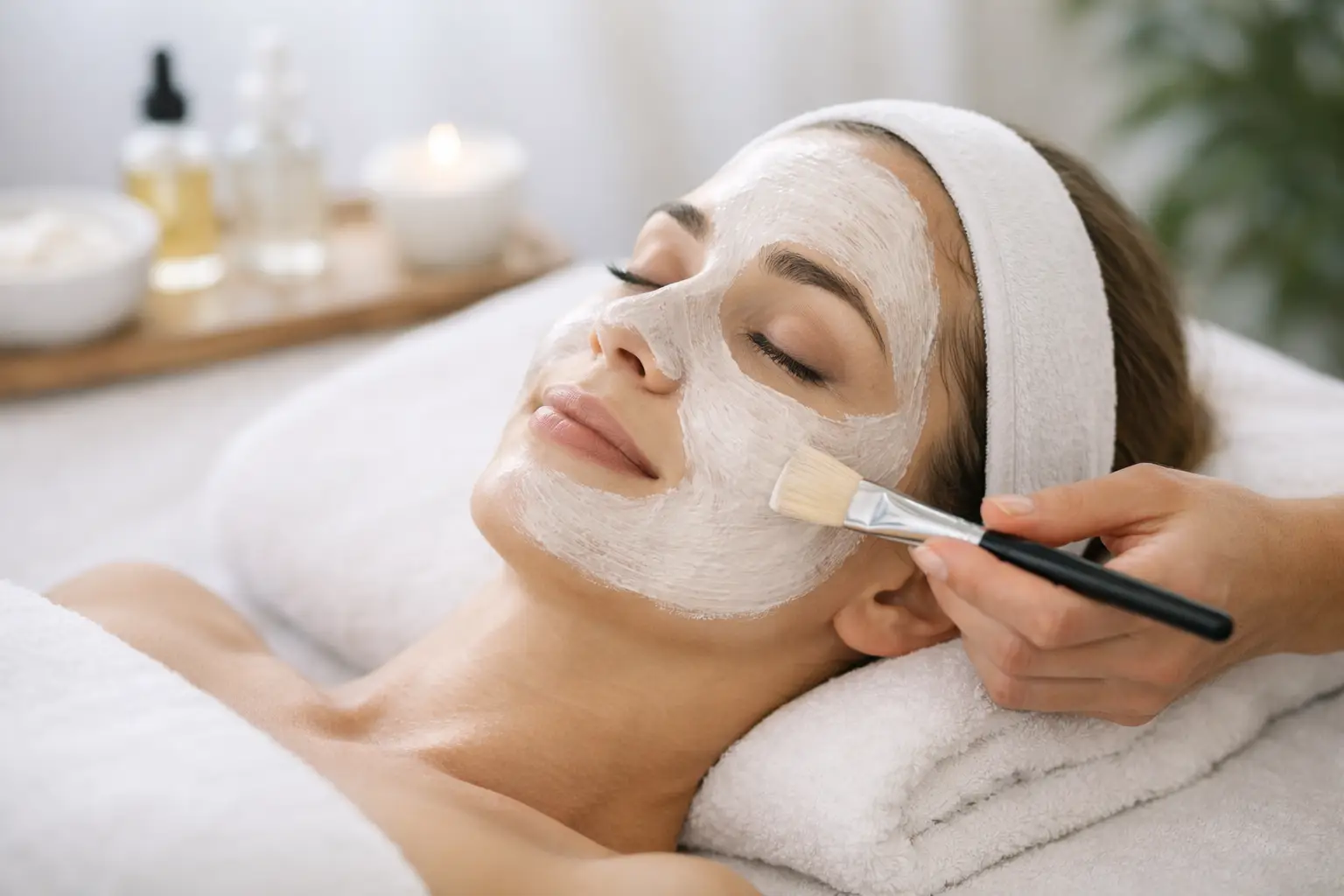
For most clients, a hydrating, barrier-repair facial is the safest place to begin. This type of facial typically includes gentle cleansing, a mild enzyme or no exfoliation at all, calming serums, and a mask designed to reduce water loss and support the skin barrier. It is especially helpful if your skin feels dry, looks dull, or reacts to weather changes, retinoids, or over-exfoliation.
A calming facial is another strong option, especially for visible redness and easily triggered skin. These treatments usually feature anti-inflammatory ingredients and techniques that cool, nourish, and comfort the skin instead of pushing it hard. They can be a smart fit for clients with rosacea-prone skin, post-inflammatory sensitivity, or skin that feels hot and reactive.
Facial massage can also be surprisingly helpful when done gently and correctly. The goal is not intense manipulation. A well-performed facial massage can support circulation, reduce puffiness, and help the skin look more rested without the irritation that often comes from stronger resurfacing methods. For sensitive clients who want a healthy glow without downtime, this can be a valuable part of treatment.
In some cases, advanced treatments may also be appropriate, but only when they are selected carefully. Cold plasma therapy, for example, may be used in some professional settings to support skin health with a gentler treatment profile than more aggressive procedures. The key is not whether a treatment sounds high-tech. It is whether it fits your skin’s tolerance and is performed with a personalized plan.
Facials sensitive skin should approach carefully
Not every popular facial is a bad choice, but some require more caution than others. Strong chemical peels can be too much for reactive skin, especially if your barrier is already compromised. Even when a peel is marketed as gentle, the concentration, pH, and your skin’s current condition all matter.
Heavy extractions are another common issue. If you are dealing with congestion, it makes sense to want pores cleaned out, but overdoing extractions can leave sensitive skin inflamed and tender. A more conservative approach is often better, sometimes spread across multiple visits rather than forcing everything into one appointment.
Microdermabrasion, abrasive scrubs, and highly active resurfacing facials may also be too stimulating for some clients. That does not mean you can never address texture, acne, or fine lines. It means your skin may need a slower plan with more recovery support built in.
How to choose the best facial for sensitive skin
Start by looking for a provider who talks about skin health, not just fast results. Sensitive skin responds best when treatment decisions are based on consultation, skin analysis, and a clear understanding of your history. If a facial menu sounds one-size-fits-all, that is a sign to ask more questions.
You should also pay attention to how the provider discusses products and technology. The best facial for sensitive skin is often less about a single brand name and more about how the treatment is tailored. Gentle cleansing, fragrance-conscious product choices, limited exfoliation, and support for the barrier are all good signs.
If you are booking a first appointment, it helps to share what has triggered your skin before. Mention reactions to retinol, acids, waxing, heat, fragrance, or certain treatments. Also mention whether your skin is currently peeling, breaking out, sunburned, or recovering from anything. These details can change what is safe to do.
A good provider will not treat caution as a problem. They will see it as part of creating a plan that gets you visible improvement without unnecessary setbacks.
Ingredients and techniques that usually work well
Sensitive skin often responds well to ingredients that hydrate and reduce inflammation. Hyaluronic acid can help draw in moisture. Ceramides support the barrier. Aloe vera, colloidal oatmeal, and certain calming botanical ingredients may help reduce that tight, reactive feeling. Niacinamide can be helpful for many people too, though very sensitive clients may still need to start slowly.
Technique matters just as much as ingredients. Lukewarm water is usually better than steam-heavy heat. Light pressure is better than vigorous rubbing. Shorter treatment time with fewer active steps can be more effective than trying to do everything at once.
This is one of the biggest misunderstandings about sensitive skin. Gentle does not mean ineffective. When your skin barrier is stronger, your skin often looks smoother, brighter, and healthier on its own.
When sensitive skin is also acne-prone or aging
Many clients feel stuck between two problems. They want to calm sensitivity, but they also want to treat acne, texture, or fine lines. The good news is that you usually do not have to choose one or the other. You just need the order to be right.
If your skin is both sensitive and acne-prone, the first step is usually to reduce inflammation and protect the barrier. Once that improves, targeted treatments for congestion or breakouts can be introduced more carefully. The same goes for anti-aging concerns. If your skin cannot tolerate strong resurfacing, it may respond better to a series of gentler treatments paired with supportive home care.
This slower approach can actually lead to better long-term results. Skin that is constantly irritated rarely performs at its best.
What to expect after a facial for sensitive skin
After the right treatment, your skin should feel calm, soft, and hydrated. Mild pinkness can happen, especially if your skin is reactive by nature, but it should not feel raw, burning, or unusually tight for days. If it does, the treatment was likely too aggressive or not properly matched to your needs.
For the next day or two, keep your routine simple. Use a gentle cleanser, moisturizer, and daily SPF. This is not the time to layer on exfoliating pads, retinoids, or multiple active serums. Let your skin hold onto the benefits of the facial instead of challenging it again right away.
With sensitive skin, consistency usually beats intensity. A regular schedule of gentle, personalized facials can do more for your skin than occasional harsh treatments that leave you needing recovery time.
A better standard for sensitive skin care
The best facial for sensitive skin should help you feel cared for, not worried about what your skin will do next. In a personalized setting like JFU Wellness Beauty, that means choosing treatments that support your skin barrier, respect your triggers, and build visible results at a pace your skin can handle.
If your skin has been telling you that “stronger” is not better, it is worth listening. Sensitive skin often thrives when it is treated with patience, precision, and a plan that puts comfort and skin health first.
Comments
-
-
-
prodvizhenie-saytov-moskva.ru
Поисковое продвижение интернет-проектов — это набор усилий, направленных на улучшение видимости в результатах поиска.
Ключевая цель такого продвижения — вывести веб-ресурс в верхние позиции поисковой выдачи по нужным запросам.
http://prodvizhenie-saytov-moskva.ru/prodvizhenie-saytov-v-chelyabinske/
Чтобы достичь такого результата оптимизаторы осуществляют внутренний аудит, трудятся над текстами, структурой и ссылочным профилем.
В итоге проект становится заметнее в поисковой выдаче, собирает больше посетителей и наращивает продажи. -
раскрутка сайтов
SEO-продвижение сайтов — это комплекс мер, нацеленных на повышение видимости в результатах поиска.
Основная цель SEO — поднять сайт на первые места поисковой выдачи по ключевым словам.
раскрутка сайта в Самаре
Для этого оптимизаторы проводят технический анализ, работают над содержанием, архитектурой и ссылками.
В итоге проект делается виднее в поисковой выдаче, получает больше целевого трафика и повышает продажи.



prodvizhenie-saytov-moskva.ru
SEO-продвижение веб-ресурсов — это комплекс работ, нацеленных на повышение рейтинга в результатах поиска.
Главная задача такого продвижения — вывести сайт в топ поисковой выдачи по целевым фразам.
http://prodvizhenie-saytov-moskva.ru/uvelichit-prodazhi/
Чтобы достичь такого результата оптимизаторы проводят технический аудит, трудятся над контентом, структурой и ссылками.
В итоге сайт становится популярнее в поисковой выдаче, получает значительно больше целевого трафика и повышает прибыль.